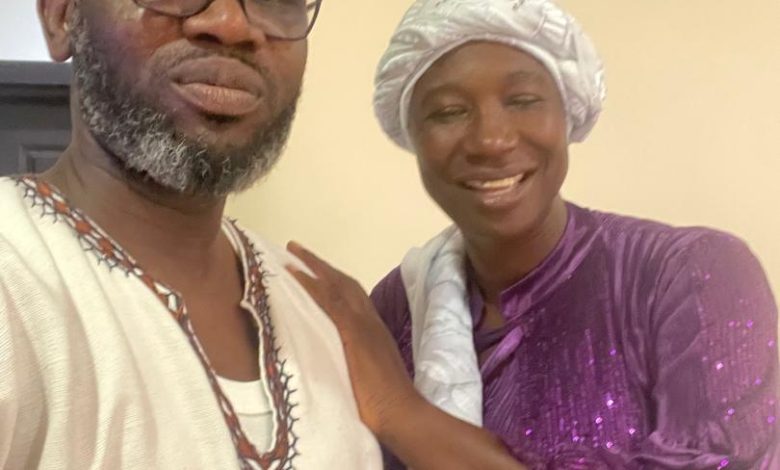
The conversation about why Ghana’s music industry is not advancing has resurfaced once again, and this time, it has been fueled by a bold revelation from Philip Hayford, CEO of Phiphas Recordz. As a producer who has worked with celebrated talents like Diana Asamoah, Ernest Opoku, Cecilia Marfo, Jack Alolome, Piesie Esther, and many others, Hayford’s voice carries weight — and his assessment exposes a long-standing truth many avoid saying aloud.
According to him, the Ghanaian music ecosystem is deeply fragmented, driven more by competition and ego than by collaboration and unity. On the surface, industry players may appear supportive of one another, but behind the scenes, distrust and self-interest dominate. This lack of genuine teamwork has become one of the biggest factors limiting the industry’s global rise.
Instead of pooling resources, building networks, and supporting one another’s growth, many artists and stakeholders focus solely on personal gain. This culture of individualism creates a weak foundation — one that cannot sustain long-term industry development. Until the music community learns to work collectively, Ghana’s dream of achieving the global impact seen in countries like Nigeria and South Africa will remain out of reach.
Another major problem highlighted by Philip Hayford is the poor royalty structure in Ghana. Musicians often do not receive fair compensation for their work. Many face challenges such as:
-
Inaccurate tracking of music streams and airplay
-
Weak enforcement of copyright systems
-
Inefficiencies within royalty collection organizations
-
Lack of transparency in distribution
As a result, artists struggle financially despite releasing hit songs and contributing massively to Ghana’s creative industry. Without a functional royalty system, musicians are forced to rely heavily on performances and endorsements, limiting their growth and creativity.
The truth is simple:
No music industry can thrive when artists are underpaid and undervalued.
To move forward, Ghana’s music industry must break the cycle of division, establish stronger systems, and embrace transparency, fairness, and unity. Only then can Ghanaian music claim the global space it rightfully deserves.
Follow Phiphas Recordz on all social platforms for more insights and updates.
Source: MediaEyeGH